
Hotel Fire Alarm Codes: NFPA 72, NFPA 101, and IBC Standards
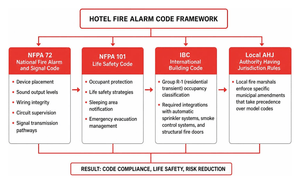
Operating a hospitality property means managing multi-family sleeping quarters alongside public assembly areas, high-volume commercial kitchens, and expansive common spaces. The foundational standards governing any commercial hotel fire alarm installation include:
- NFPA 72 (National Fire Alarm and Signal Code): Dictates exact device placement, sound output levels, wiring integrity, circuit supervision, emergency notification pathways, and signal transmission pathways.
- NFPA 101 (Life Safety Code): Governs occupant protection, life safety strategies, sleeping area notification, egress marking, and emergency evacuation management across hospitality spaces.
- International Building Code (IBC): Classifies hotels under Group R-1 (residential transient) occupancies and outlines required integrations with automatic sprinkler systems, smoke control systems, elevated elevator recalls, and structural fire doors.
- Local AHJ (Authority Having Jurisdiction) Rules: Local fire marshals often enforce specific municipal amendments that take precedence over general model codes, including specialized municipal reporting protocols.
Maintaining full compliance reduces legal exposure and protects your property from severe liability claims in the event of an incident. Furthermore, insurance carriers regularly tie property coverage premiums directly to verifiable safety ratings, system maintenance records, and code compliance logs. Failing to address underlying electrical issues can compromise system reliability—learn the 5 Warning Signs Your Commercial Electrical System Needs Immediate Attention.
Backup Power and Secondary Electrical Systems
Fire alarm systems must remain fully functional during primary utility power outages to ensure guest safety continuously. NFPA 72 mandates that every system feature a secondary power supply capable of automatically taking over should main power fail without interrupting active monitoring.
- Standby Batteries: Sealed lead-acid or gel-cell batteries housed inside or adjacent to the main control panel must provide at least 24 hours of standard supervisory operation, followed immediately by 5 consecutive minutes of full alarm notification (or 15 minutes for emergency voice systems).
- Emergency Generators: When an emergency generator serves as secondary power, it must start and transfer load automatically within 10 seconds of main power loss, supported by dedicated battery back-up to bridge the transfer window seamlessly.
Required Documentation and Compliance Logging
To satisfy fire inspectors and insurance auditors during routine inspections, hotels must maintain systematic, accessible records on site. Per NFPA 72 standards, your compliance binder or digital management system should track:
- Device Inventories: A complete, detailed mapping of every detector, manual pull station, waterflow switch, duct sensor, and notification appliance across the property.
- Inspection and Test Reports: Documented outcomes from weekly, monthly, semiannual, and annual maintenance evaluations conducted by qualified technicians.
- Maintenance Logs: Historical records detailing component replacements, battery updates, panel resets, software revisions, and sensitivity recalibrations.
Key Components of a Modern Fire Safety System
A fully integrated commercial system relies on interconnected elements that gather environmental data, process threats, and broadcast clear directives throughout the facility. Modern fire safety design integrates central processing panels, distributed emergency voice communication systems, and dedicated monitoring channels to ensure immediate life safety response.
Addressable Signaling Line Circuits (SLCs) allow the primary Fire Alarm Control Panel (FACP) to pinpoint the precise room, hallway, or mechanical zone reporting a threat. Secondary off-site monitoring is managed through dual-path transmitters utilizing redundant cellular and IP connections to route immediate alarm signals to central dispatch centers, bypassing potential phone line disruptions.
Smart Sensors and Multi-Criteria Hotel Fire Alarm Detectors
Modern commercial hospitality facilities deploy advanced multi-criteria sensors in guest rooms and common spaces. These units evaluate multiple environmental parameters simultaneously—such as airborne particulates, ambient thermal changes, and carbon monoxide (CO) gas levels.
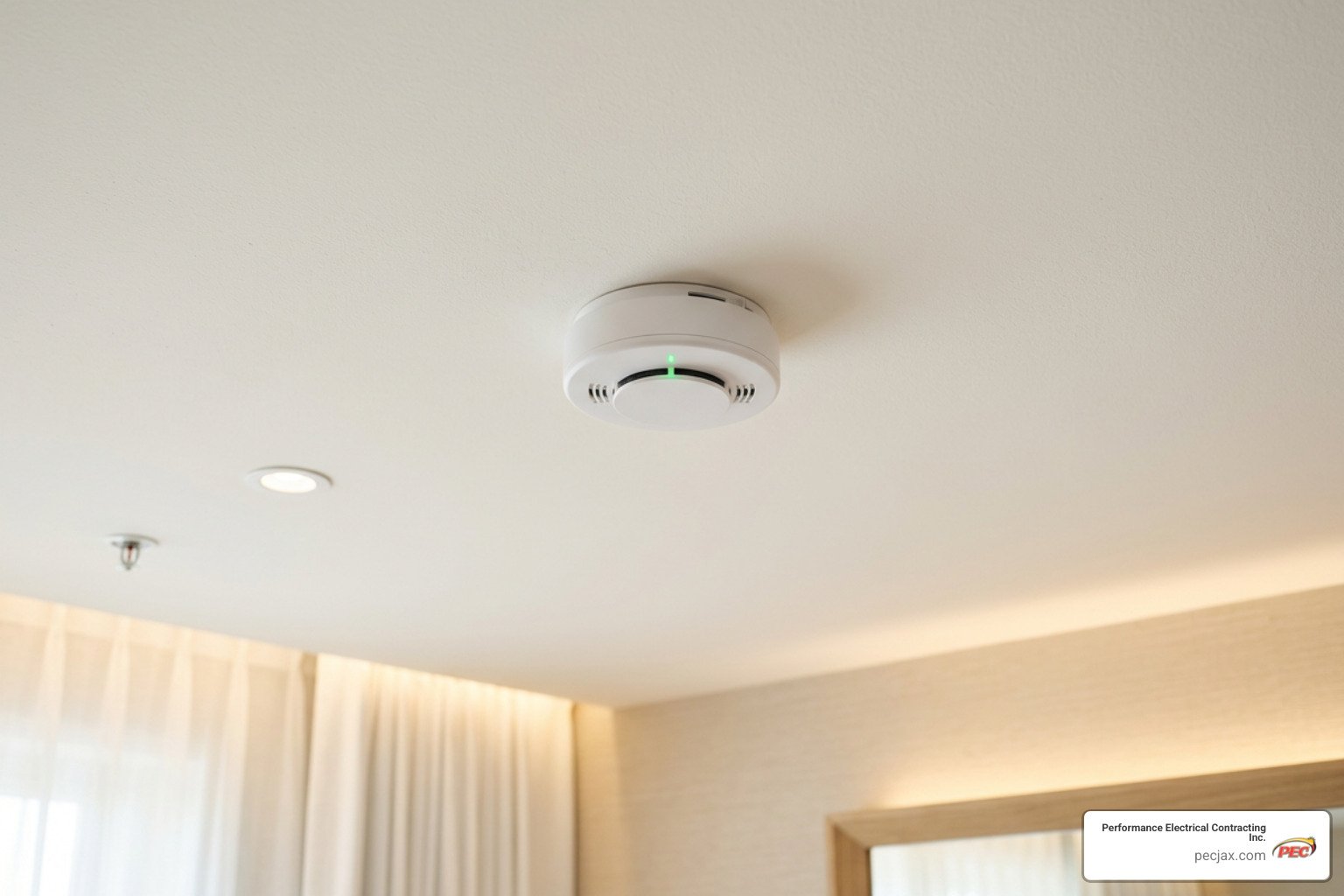
By requiring confirmation across multiple sensor elements (such as verifying a rapid heat spike alongside smoke particulates), smart detectors effectively eliminate common nuisance triggers from harmless shower steam, aerosol hairsprays, or light cooking smoke while speeding up genuine fire detection. Specialized heat detectors are installed in areas unsuited for photo-electric smoke sensors, such as mechanical rooms, commercial kitchens, laundry facilities, and boiler spaces.
In-Room Notification and ADA Accessibility Compliance
NFPA 72 mandates specific low-frequency notification standards for sleeping accommodations to wake occupants effectively. Notification devices in guest rooms must generate a 520Hz low-frequency square-wave audio tone. Standard high-pitch fire alarm horns are far less effective at waking sleeping occupants, alcohol-impaired guests, deep sleepers, or individuals with mild to severe hearing loss.
For Americans with Disabilities Act (ADA) compliance, designated accessible guest rooms must incorporate specialized notification appliances:
- High-Intensity Visual Strobes: Synchronized flashes engineered to wake sleeping guests without triggering photosensitive seizures or disorientation.
- Tactile Devices (Bed Shakers): Connected directly to the room’s sounder base or FACP output to vibrate the bed mattress vigorously upon system activation.
Preventing Nuisance Triggers and Managing False Evacuations
False fire alarms cost hospitality businesses heavily in lost guest satisfaction, municipal emergency response fines, operational disruption, and reputation damage.
Real-world dispatch logs regularly detail building-wide dispatches triggered by minor localized issues, such as a hotel fire alarm triggered by burnt popcorn in Trumansburg NY or a hotel fire alarm caused by burnt food in Eagan MN. Modern system design helps prevent these localized incidents from escalating into unnecessary general building evacuations.
Supervisory Programming versus General Building Alarms
Addressable control panel logic allows engineers to separate local in-room events from general building alarms effectively:
- In-Room Supervisory Signals: When a single guest room detector senses smoke, the panel activates only that specific room’s sounder base while sending a supervisory alert to the front desk console. This gives staff time to inspect the room immediately without dumping the whole building unnecessarily.
- Cross-Zoning Logic (“Any 2” Rule): The panel initiates a full building-wide evacuation only if a second adjacent detector trips, if smoke spreads into public corridors, or if an automatic sprinkler waterflow switch opens.
Handling Guest Customer Service During a Hotel Fire Alarm Disruption
When a false alarm occurs, staff response dictates guest retention and online reviews. Night auditors and front-desk personnel must remain calm, helpful, and empathetic throughout the event. Poor staff communication during middle-of-the-night disruptions often turns minor inconveniences into severe customer service liabilities, as seen when a guest was threatened over a beeping smoke detector.
While full room refunds are rarely legally required for brief false alarms outside management control, proactive gestures—such as sincere verbal apologies, complimentary breakfast passes, late checkout options, or loyalty reward points—go a long way toward preserving brand reputation and guest loyalty.
Inspection, Testing, and Staff Evacuation Protocols
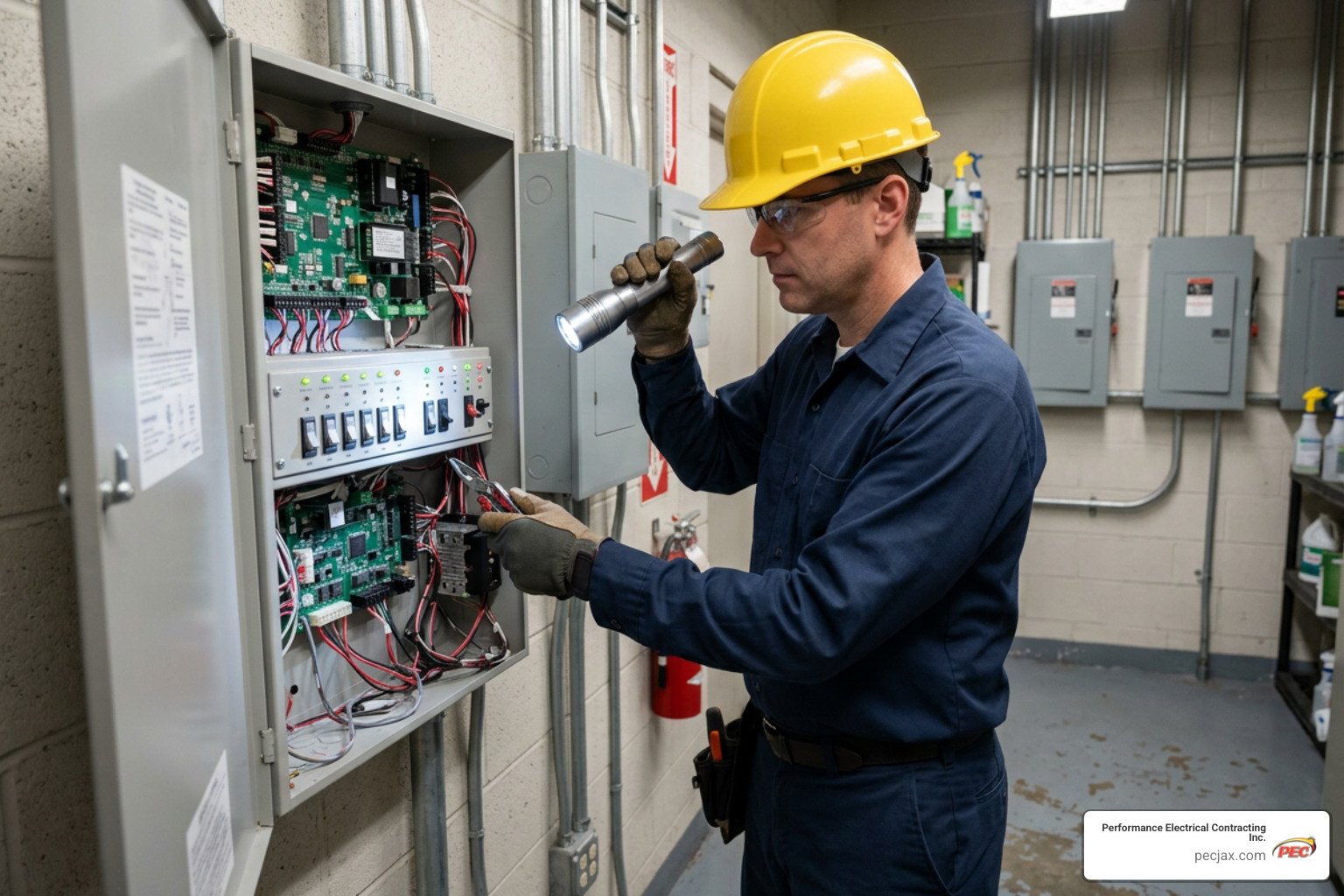
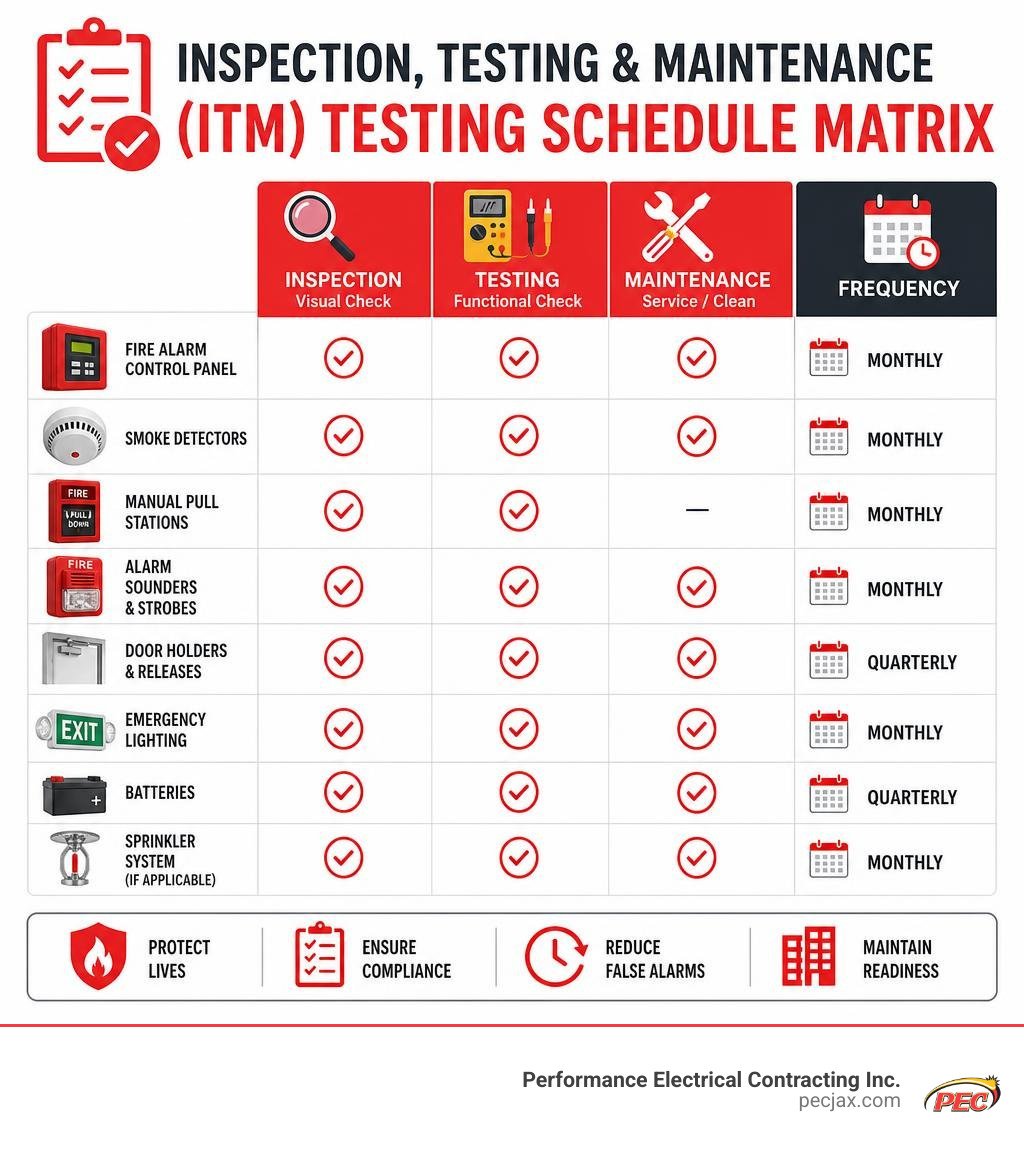
A comprehensive Inspection, Testing, and Maintenance (ITM) schedule ensures system readiness while fulfilling regulatory mandates. Ensure your building’s underlying infrastructure is up to standard by learning why you should upgrade old electrical outlets and switches.
Staff Emergency Response Training and Evacuation Workflows
Staff training must be executed routinely so night auditors, maintenance technicians, and day crews respond instinctively during emergencies:
- Panel Verification: Staff must immediately check the FACP or remote annunciator panel to identify the exact active zone, room number, and device type.
- Investigation Protocol: Dedicated staff members immediately verify the source area if the panel indicates a localized supervisory signal rather than a general alarm.
- Dispatch Coordination: Confirm off-site central station signal delivery and communicate directly with arriving fire service units to brief emergency crews on the status.
- Guest Evacuation Guidance: Direct guests down clear, unblocked emergency stairwells, ensuring elevators automatically recall to the ground level and lock out service for safety.
Upgrading Legacy Fire Protection in Older Hospitality Properties
Older hotel properties operating on conventional zone-based systems face higher maintenance costs, frequent troubleshooting, and an increased risk of false alarms. Retrofitting with addressable control panels allows properties to keep existing conduit while replacing end devices with smart multi-criteria sensors. Where running new field wiring is cost-prohibitive or structurally challenging, AHJ-approved commercial wireless fire alarm systems offer seamless retrofits with minimal disruption to guest room availability.
Frequently Asked Questions About Hotel Fire Alarm Protocols
How do hotel fire alarm systems prevent false building-wide evacuations?
Hotels utilize addressable FACP logic where in-room detectors trip localized sounder bases and supervisory panel alerts first. General building-wide alarms are typically reserved for common area corridor detectors, manual pull stations, sprinkler waterflow activations, or multi-detector cross-zoning verification.
Are hotels required to have low-frequency 520Hz sounders in guest rooms?
Yes. NFPA 72 mandates 520Hz low-frequency sounder bases for sleeping rooms across commercial hospitality occupancies. Research proves that 520Hz square-wave tones are significantly more effective at waking sleeping occupants, deep sleepers, and hearing-impaired individuals than traditional high-pitch alarms.
How often must hotel fire alarm systems undergo testing and maintenance?
Testing follows NFPA 72 schedules: visual panel checks occur weekly or monthly, functional tests on secondary batteries and pull stations are performed semiannually, and a full system evaluation—including sensitivity testing on every smoke detector—is required annually.
Keep Your Hotel Compliant and Safe

Protecting your guests, staff, and physical asset requires a commercial fire alarm system built on proper engineering, meticulous maintenance, and strict regulatory compliance. Partnering with qualified commercial electrical specialists ensures your facility operates seamlessly, protecting your guests from fire hazards while minimizing false alarm disruptions and operational downtime.
For professional electrical maintenance, commercial upgrades, and expert code compliance support tailored to your hospitality property, visit Performance Electrical Contracting Inc. today.